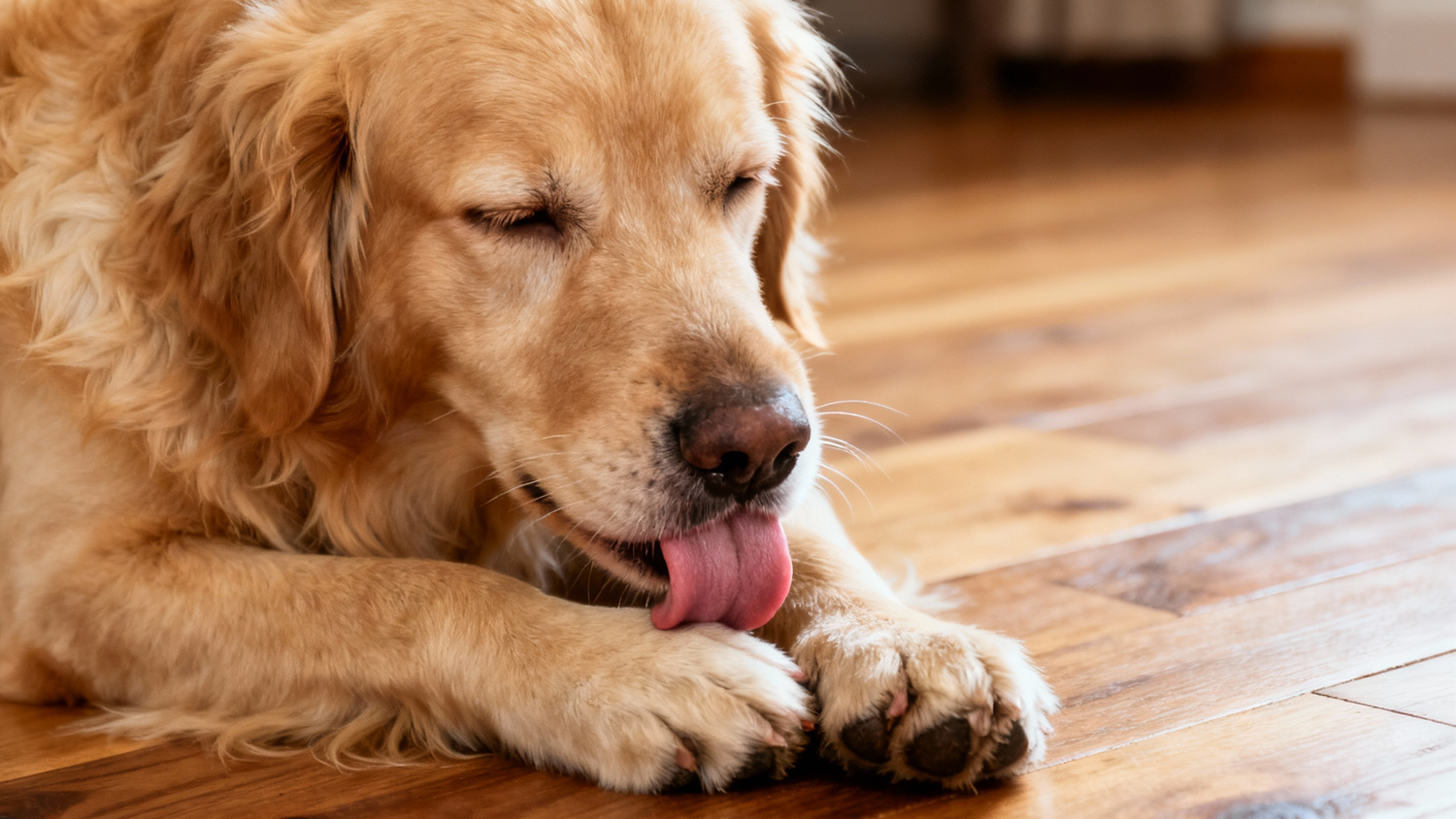
The repetitive sound of a dog licking its paws can be a source of wonder and worry for any owner. Is it a harmless self-grooming habit, a sign of boredom, or a red flag for a more serious underlying issue? While occasional licking is normal, persistent, obsessive licking is your dog’s way of telling you something is wrong. This guide will help you decipher the clues, differentiate between behavioral habits and medical problems like allergies, and find the right solutions for your furry friend.
Medical Clues: Check the Paws for Physical Signs
Rather than jumping to conclusions about your dog’s paw-licking being habitual, it is essential to carry out a physical examination on your dog’s paws before drawing any conclusions. A normal paw pad, in general, is fine, smooth, and irritation-free. It is necessary to get down with your dog to see if there are any signs in their paw pads indicating any problems.
- Redness and Swelling: Inflamed, pink or red skin between the toes or on the pads is a classic sign of irritation. This is often caused by an allergic reaction or a secondary infection that has developed from the constant moisture of licking. The paws might also appear puffy or swollen compared to normal.
- Odor: Healthy paws should smell neutral, maybe faintly like corn chips (which is normal). However, a pungent, musty, or foul odor often indicates a yeast or bacterial infection. These opportunistic infections thrive in the warm, damp environment created by excessive licking.
- Pain or Discomfort: If your dog winces, pulls away, or becomes defensive when you try to touch their paws, it’s a clear sign of pain. This could be due to severe inflammation, a foreign object embedded in the pad (like a thorn or glass), a broken nail, or even an insect bite.
Core Diagnosis: Distinguish Environmental from Food Allergies
If you've noticed redness and inflammation, allergies are a primary suspect. The challenge is figuring out what your dog is allergic to. Allergies in dogs generally fall into two main categories: environmental and food-related. Pinpointing the type is key to effective treatment.
An environmental allergy, or atopy, is an immune reaction to things like pollen, grass, dust mites, or mold. This type of allergy is often seasonal, flaring up in the spring or fall when pollen counts are high. The itching is typically widespread, affecting not just the paws but also the ears, belly, and face.
A food allergy, on the other hand, is an immune response to a specific ingredient in their diet, most commonly a protein like chicken, beef, or dairy. Unlike environmental allergies, food allergies are present year-round. This is where finding the best dry dog food for skin allergies becomes essential. These allergies can also cause gastrointestinal issues, making a specialized dog food for a sensitive stomach a necessary part of the solution.

Behavioral Clues: Observe the Timing and Context of the Licking
Beyond physical symptoms, your dog’s behavior provides valuable clues. Becoming a careful observer can help you and your vet narrow down the cause of the paw licking. Pay close attention to when and in what situations the licking occurs.
If the licking primarily happens after coming inside from a walk, especially during certain seasons, an environmental allergy is a likely culprit. Your dog is essentially trying to lick off the pollen or grass irritating their paws.
Conversely, if the licking is constant throughout the day and doesn't seem linked to any particular activity, a food allergy might be to blame. However, if the licking only occurs when you're preparing to leave the house, during thunderstorms, or when your dog is left alone for long periods, the cause is more likely behavioral—stemming from anxiety, stress, or simple boredom.
Solutions: Targeted Dietary and Behavioral Management
Once you have a better idea of the potential cause, you can begin to implement targeted solutions. For any suspected medical issue, consulting your veterinarian is the most important step. They can perform tests to confirm an allergy and rule out other problems.
For suspected food allergies, diet is the cornerstone of treatment. Your vet may recommend an elimination diet, which involves switching to a food with a novel protein (one your dog has never eaten before, like venison or duck) for 8-12 weeks. This process is key to identifying the trigger and finding the best dry dog food for skin allergies for your pet.
Incorporating Omega-3 foods for dogs is beneficial for both environmental and food allergies. Omega-3 fatty acids have natural anti-inflammatory properties that can help soothe itchy skin and strengthen the skin barrier. Look for a healthy dog food that is rich in sources like fish oil or flaxseed. Many owners explore grain-free dog food, but it's important to remember that proteins are the more common allergen. Any diet change, especially to a dog food for a sensitive stomach, should be done gradually and with veterinary guidance.

PetCoolGo GoCore™ Dog Dry Food – 32% High Protein | Chicken & Duck Balanced Multi-Meat Protein | 4lb / 11lb
Size: 4lb
For environmental allergies, you can reduce exposure by wiping your dog’s paws with a damp cloth after every walk to remove allergens. Your vet may also prescribe antihistamines or other medications to manage the itching.
If boredom or anxiety is the root cause, increasing physical and mental stimulation is key.
- Increase Exercise: A tired dog is a happy dog. Ensure your dog is getting enough walks, runs, and playtime.
- Introduce Puzzle Toys: Food-dispensing toys and puzzles engage your dog’s mind and give them a productive task to focus on instead of their paws.
- Provide Enrichment: Activities like scent work or learning new tricks can build confidence and combat boredom.
Take Action: Solve Your Dog's Paw Licking Today
Excessive paw-licking is not only an inconvenience; it’s also an action requiring your concern. By looking closer at your dog’s paws for any underlying health indicators, taking context into consideration, and consulting with your veterinarian, you could get to the bottom of why it’s happening. Whether it’s simply finding what healthy dog food to alleviate allergies or perhaps getting your dog more stimulation to alleviate boredom, solving it means your dog will live happier and healthier.

FAQs
Q1: What are good sources of Omega-3 for my dog's skin?
Excellent food sources include cold-water fish such as salmon, sardines, and mackerel. Many high-quality commercial dog foods incorporate fish oil into their products. Fish oil in its supplement form, whether in capsules or liquids, can also provide your dog with the necessary Omega-3 nutrients, after consultation with your veterinarian for proper dosage. These Omega-3 foods for dog consumption are ideal for alleviating skin irritation.
Q2: Is grain-free dog food always the best option for allergies?
Not really. Though some dogs are allergic to some grains, chicken or beef remains a more common allergen from proteins. Recently, there has been such an emphasis on grain-free dog food that this particular point has tended to be neglected. If there is reason to believe there is an allergy, it would probably be more helpful to identify what protein trigger is responsible through an elimination diet with your veterinarian’s assistance. Understanding the link between diet and coat health is crucial for your pet's well-being.
Q3: My dog only seems to lick their paws at night. What could this mean?
It's common for your dog to lick at night for several reasons. It's quiet in the home, with fewer things to distract your dog from any itching sensations they may have. It could also be something they do to comfort themselves before drifting off to sleep. If your dog's paws look like they have irritation, it means it's due to allergies, with itching just being more pronounced in those nocturnal hours. If the licking is accompanied by other unusual behaviors like picky eating, it's worth exploring those patterns as well.


Leave a comment
This site is protected by hCaptcha and the hCaptcha Privacy Policy and Terms of Service apply.